DBA Hub

📋Steps in this guide1/18

Oracle WebLogic Server (WLS) 12cR1 (12.1.3) Installation on Oracle Linux 5 and 6

This article describes the installation of Oracle WebLogic Server (WLS) 12cR1 (12.1.3) on Oracle Linux 5 and 6.

oracle 12cconfigurationintermediate
by OracleDba
13 views
1

Installation

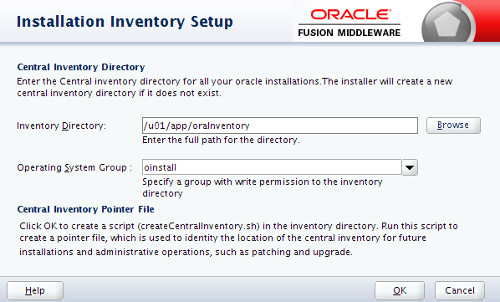
This article presents a brief overview of installing Oracle WebLogic Server (WLS) 12cR1 (12.1.3) on Oracle Linux 5 and 6. - Assumptions - Download Software - Setup - Installation - Create Domain - Post-Installation Related articles. This article assumes you have an existing server (real or virtual) with either Oracle Linux 5.x or 6.x installed on it. For instruction on how to do this check out the following articles. - Oracle Linux 5 (OL5) Installation : I did the basic installation with no extra package groups for this installation. - Oracle Linux 6 (OL6) Installation : I picked the "Desktop" option for this installation, so I would have a graphical interface without having to select separate package groups. Everything in the installation will be 64-bit. Download the Weblogic Server 12c software from Oracle Technology Network . The following actions should be performed by the "root" user. Make sure the "/etc/hosts" file contains correct entries for both the "localhost" and real host names. Create a new group and user. Create the directories in which the Oracle software will be installed. Append the following entries into the "/home/oracle/.bash_profile" file. Install the JDK. As specified in MOS Note [ID 1487773.1] , amend the "/etc/security/limits.d/90-nproc.conf" file, making the following change. Run the installer as the "oracle" user. Accept the "WebLogic Server Installation" option by clicking the "Next" button. Wait for the prerequisite checks to complete. If there are failures, correct them and rerun the checks. If there are no failures, click the "Next" button. If you are happy with the summary information, click the "Install" button. Wait for the installation to complete, then click the "Next" button. On the installation complete screen, click the "Finish" button to launch the Configuration Wizard. If you have not chosen to launch the Configuration Wizard as part of the installation, you can do it manually. Accept the "Create a new domain" option, enter the domain name at the end of the "Domain Location", then click the "Next" button. In this case my domain was called "mydomain", so the path I used was "/u01/app/oracle/config/domains/mydomain". Select the required product template and click the "Next" button. Enter the administrator credentials and click the "Next" button. Enter the domain mode and JDK details, then click the "Next" button. Select any required advanced configuration options. For this example I ignored the advanced configuration. Click the "Next" button. If you are happy with the configuration summary screen, click the "Create" button. Once the domain is created, click the "Next" button. Make a note of the Admin Server URL and click the "Finish" button. If you chose the "Production Mode" options for the domain, you will need to create a "boot.properties" file for the scripts referred to later to work without credentials. Adjust the DOMAIN_HOME and credentials appropriately. The "$ORACLE_BASE/config/domains/mydomain" directory now contains a script that can be used to start the server. Remember to use the "&" if you want access to the commandline to be returned. Once the server is started you can access the administrator console using the "http://hostname:port/console" URL. Log in using the username and password provided in the previous step. The following scripts are useful. For more information see: Hope this helps. Regards Tim... Accept the "WebLogic Server Installation" option by clicking the "Next" button. Wait for the prerequisite checks to complete. If there are failures, correct them and rerun the checks. If there are no failures, click the "Next" button. If you are happy with the summary information, click the "Install" button. Wait for the installation to complete, then click the "Next" button. On the installation complete screen, click the "Finish" button to launch the Configuration Wizard. If you have not chosen to launch the Configuration Wizard as part of the installation, you can do it manually. Accept the "Create a new domain" option, enter the domain name at the end of the "Domain Location", then click the "Next" button. In this case my domain was called "mydomain", so the path I used was "/u01/app/oracle/config/domains/mydomain". Select the required product template and click the "Next" button. Enter the administrator credentials and click the "Next" button. Enter the domain mode and JDK details, then click the "Next" button. Select any required advanced configuration options. For this example I ignored the advanced configuration. Click the "Next" button. If you are happy with the configuration summary screen, click the "Create" button. Once the domain is created, click the "Next" button. Make a note of the Admin Server URL and click the "Finish" button. If you chose the "Production Mode" options for the domain, you will need to create a "boot.properties" file for the scripts referred to later to work without credentials. Adjust the DOMAIN_HOME and credentials appropriately. The "$ORACLE_BASE/config/domains/mydomain" directory now contains a script that can be used to start the server. Remember to use the "&" if you want access to the commandline to be returned. Once the server is started you can access the administrator console using the "http://hostname:port/console" URL. Log in using the username and password provided in the previous step. The following scripts are useful. For more information see: Hope this helps. Regards Tim... Accept the "WebLogic Server Installation" option by clicking the "Next" button. Wait for the prerequisite checks to complete. If there are failures, correct them and rerun the checks. If there are no failures, click the "Next" button. If you are happy with the summary information, click the "Install" button. Wait for the installation to complete, then click the "Next" button. On the installation complete screen, click the "Finish" button to launch the Configuration Wizard. If you have not chosen to launch the Configuration Wizard as part of the installation, you can do it manually. Accept the "Create a new domain" option, enter the domain name at the end of the "Domain Location", then click the "Next" button. In this case my domain was called "mydomain", so the path I used was "/u01/app/oracle/config/domains/mydomain". Select the required product template and click the "Next" button. Enter the administrator credentials and click the "Next" button. Enter the domain mode and JDK details, then click the "Next" button. Select any required advanced configuration options. For this example I ignored the advanced configuration. Click the "Next" button. If you are happy with the configuration summary screen, click the "Create" button. Once the domain is created, click the "Next" button. Make a note of the Admin Server URL and click the "Finish" button. If you chose the "Production Mode" options for the domain, you will need to create a "boot.properties" file for the scripts referred to later to work without credentials. Adjust the DOMAIN_HOME and credentials appropriately. The "$ORACLE_BASE/config/domains/mydomain" directory now contains a script that can be used to start the server. Remember to use the "&" if you want access to the commandline to be returned. Once the server is started you can access the administrator console using the "http://hostname:port/console" URL. Log in using the username and password provided in the previous step. The following scripts are useful. For more information see: Hope this helps. Regards Tim... Accept the "WebLogic Server Installation" option by clicking the "Next" button. Wait for the prerequisite checks to complete. If there are failures, correct them and rerun the checks. If there are no failures, click the "Next" button. If you are happy with the summary information, click the "Install" button. Wait for the installation to complete, then click the "Next" button. On the installation complete screen, click the "Finish" button to launch the Configuration Wizard. If you have not chosen to launch the Configuration Wizard as part of the installation, you can do it manually. Accept the "Create a new domain" option, enter the domain name at the end of the "Domain Location", then click the "Next" button. In this case my domain was called "mydomain", so the path I used was "/u01/app/oracle/config/domains/mydomain". Select the required product template and click the "Next" button. Enter the administrator credentials and click the "Next" button. Enter the domain mode and JDK details, then click the "Next" button. Select any required advanced configuration options. For this example I ignored the advanced configuration. Click the "Next" button. If you are happy with the configuration summary screen, click the "Create" button. Once the domain is created, click the "Next" button. Make a note of the Admin Server URL and click the "Finish" button. If you chose the "Production Mode" options for the domain, you will need to create a "boot.properties" file for the scripts referred to later to work without credentials. Adjust the DOMAIN_HOME and credentials appropriately. The "$ORACLE_BASE/config/domains/mydomain" directory now contains a script that can be used to start the server. Remember to use the "&" if you want access to the commandline to be returned. Once the server is started you can access the administrator console using the "http://hostname:port/console" URL. Log in using the username and password provided in the previous step. The following scripts are useful. For more information see: Hope this helps. Regards Tim...
Step 1
2

Installation

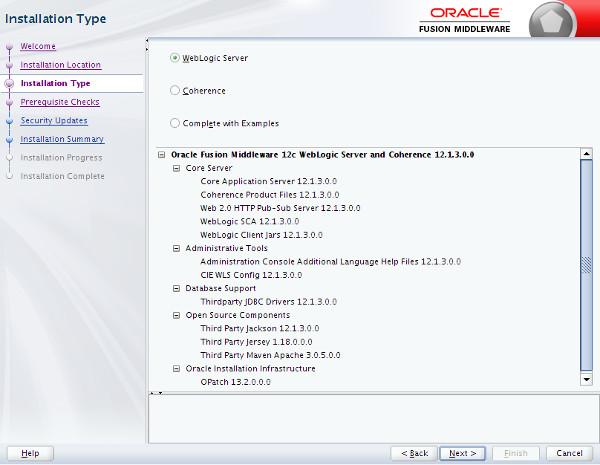
Accept the "WebLogic Server Installation" option by clicking the "Next" button. Wait for the prerequisite checks to complete. If there are failures, correct them and rerun the checks. If there are no failures, click the "Next" button. If you are happy with the summary information, click the "Install" button. Wait for the installation to complete, then click the "Next" button. On the installation complete screen, click the "Finish" button to launch the Configuration Wizard. If you have not chosen to launch the Configuration Wizard as part of the installation, you can do it manually. Accept the "Create a new domain" option, enter the domain name at the end of the "Domain Location", then click the "Next" button. In this case my domain was called "mydomain", so the path I used was "/u01/app/oracle/config/domains/mydomain". Select the required product template and click the "Next" button. Enter the administrator credentials and click the "Next" button. Enter the domain mode and JDK details, then click the "Next" button. Select any required advanced configuration options. For this example I ignored the advanced configuration. Click the "Next" button. If you are happy with the configuration summary screen, click the "Create" button. Once the domain is created, click the "Next" button. Make a note of the Admin Server URL and click the "Finish" button. If you chose the "Production Mode" options for the domain, you will need to create a "boot.properties" file for the scripts referred to later to work without credentials. Adjust the DOMAIN_HOME and credentials appropriately. The "$ORACLE_BASE/config/domains/mydomain" directory now contains a script that can be used to start the server. Remember to use the "&" if you want access to the commandline to be returned. Once the server is started you can access the administrator console using the "http://hostname:port/console" URL. Log in using the username and password provided in the previous step. The following scripts are useful. For more information see: Hope this helps. Regards Tim... Accept the "WebLogic Server Installation" option by clicking the "Next" button. Wait for the prerequisite checks to complete. If there are failures, correct them and rerun the checks. If there are no failures, click the "Next" button. If you are happy with the summary information, click the "Install" button. Wait for the installation to complete, then click the "Next" button. On the installation complete screen, click the "Finish" button to launch the Configuration Wizard. If you have not chosen to launch the Configuration Wizard as part of the installation, you can do it manually. Accept the "Create a new domain" option, enter the domain name at the end of the "Domain Location", then click the "Next" button. In this case my domain was called "mydomain", so the path I used was "/u01/app/oracle/config/domains/mydomain". Select the required product template and click the "Next" button. Enter the administrator credentials and click the "Next" button. Enter the domain mode and JDK details, then click the "Next" button. Select any required advanced configuration options. For this example I ignored the advanced configuration. Click the "Next" button. If you are happy with the configuration summary screen, click the "Create" button. Once the domain is created, click the "Next" button. Make a note of the Admin Server URL and click the "Finish" button. If you chose the "Production Mode" options for the domain, you will need to create a "boot.properties" file for the scripts referred to later to work without credentials. Adjust the DOMAIN_HOME and credentials appropriately. The "$ORACLE_BASE/config/domains/mydomain" directory now contains a script that can be used to start the server. Remember to use the "&" if you want access to the commandline to be returned. Once the server is started you can access the administrator console using the "http://hostname:port/console" URL. Log in using the username and password provided in the previous step. The following scripts are useful. For more information see: Hope this helps. Regards Tim...
Step 2
3

Installation

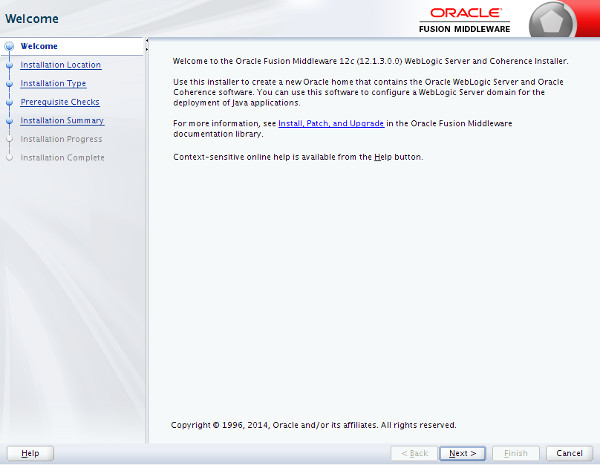
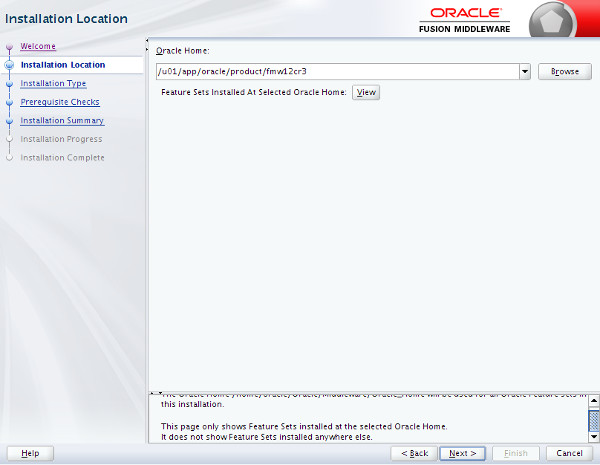
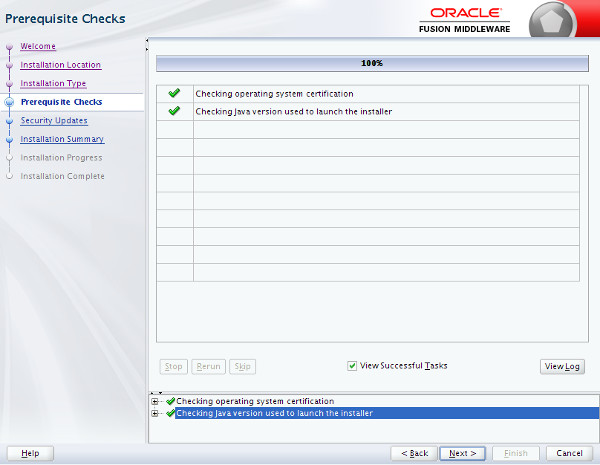
Accept the "WebLogic Server Installation" option by clicking the "Next" button.
Step 3
4

Installation

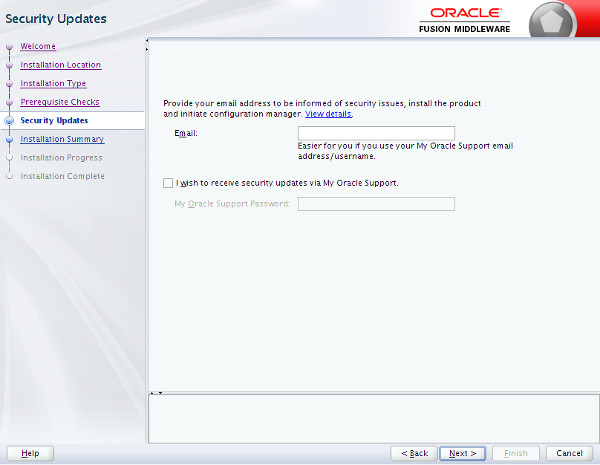
Wait for the prerequisite checks to complete. If there are failures, correct them and rerun the checks. If there are no failures, click the "Next" button.
Step 4
5

Installation

If you are happy with the summary information, click the "Install" button. Wait for the installation to complete, then click the "Next" button. On the installation complete screen, click the "Finish" button to launch the Configuration Wizard. If you have not chosen to launch the Configuration Wizard as part of the installation, you can do it manually. Accept the "Create a new domain" option, enter the domain name at the end of the "Domain Location", then click the "Next" button. In this case my domain was called "mydomain", so the path I used was "/u01/app/oracle/config/domains/mydomain". Select the required product template and click the "Next" button. Enter the administrator credentials and click the "Next" button. Enter the domain mode and JDK details, then click the "Next" button. Select any required advanced configuration options. For this example I ignored the advanced configuration. Click the "Next" button. If you are happy with the configuration summary screen, click the "Create" button. Once the domain is created, click the "Next" button. Make a note of the Admin Server URL and click the "Finish" button. If you chose the "Production Mode" options for the domain, you will need to create a "boot.properties" file for the scripts referred to later to work without credentials. Adjust the DOMAIN_HOME and credentials appropriately. The "$ORACLE_BASE/config/domains/mydomain" directory now contains a script that can be used to start the server. Remember to use the "&" if you want access to the commandline to be returned. Once the server is started you can access the administrator console using the "http://hostname:port/console" URL. Log in using the username and password provided in the previous step. The following scripts are useful. For more information see: Hope this helps. Regards Tim... If you are happy with the summary information, click the "Install" button. Wait for the installation to complete, then click the "Next" button. On the installation complete screen, click the "Finish" button to launch the Configuration Wizard. If you have not chosen to launch the Configuration Wizard as part of the installation, you can do it manually. Accept the "Create a new domain" option, enter the domain name at the end of the "Domain Location", then click the "Next" button. In this case my domain was called "mydomain", so the path I used was "/u01/app/oracle/config/domains/mydomain". Select the required product template and click the "Next" button. Enter the administrator credentials and click the "Next" button. Enter the domain mode and JDK details, then click the "Next" button. Select any required advanced configuration options. For this example I ignored the advanced configuration. Click the "Next" button. If you are happy with the configuration summary screen, click the "Create" button. Once the domain is created, click the "Next" button. Make a note of the Admin Server URL and click the "Finish" button. If you chose the "Production Mode" options for the domain, you will need to create a "boot.properties" file for the scripts referred to later to work without credentials. Adjust the DOMAIN_HOME and credentials appropriately. The "$ORACLE_BASE/config/domains/mydomain" directory now contains a script that can be used to start the server. Remember to use the "&" if you want access to the commandline to be returned. Once the server is started you can access the administrator console using the "http://hostname:port/console" URL. Log in using the username and password provided in the previous step. The following scripts are useful. For more information see: Hope this helps. Regards Tim...
Step 5
6

Installation

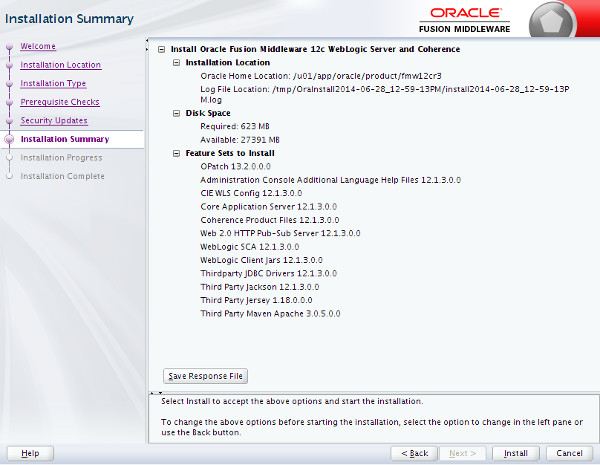
If you are happy with the summary information, click the "Install" button.
Step 6
7

Installation

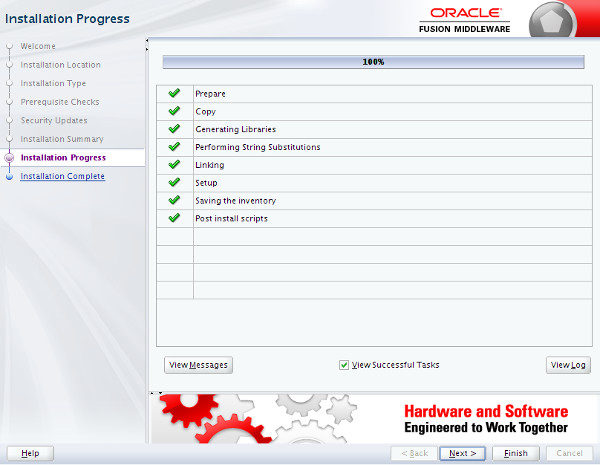
Wait for the installation to complete, then click the "Next" button.
Step 7
8

Installation

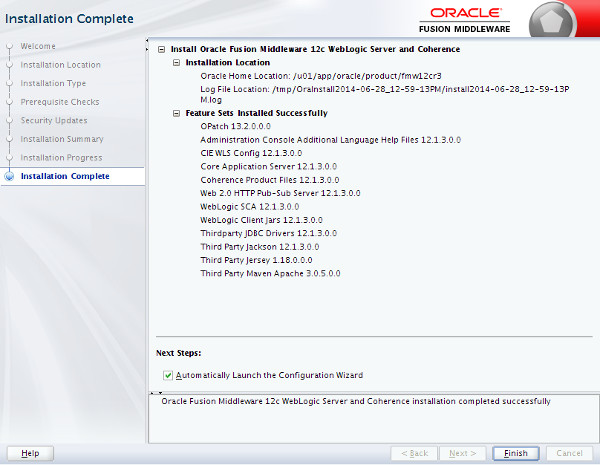
On the installation complete screen, click the "Finish" button to launch the Configuration Wizard.
Step 8
9

Create Domain

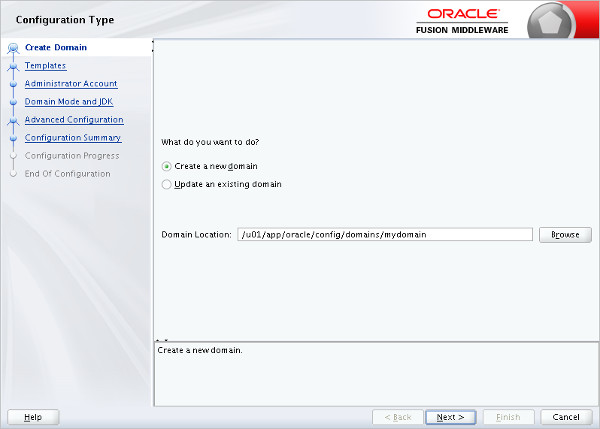
If you have not chosen to launch the Configuration Wizard as part of the installation, you can do it manually. Accept the "Create a new domain" option, enter the domain name at the end of the "Domain Location", then click the "Next" button. In this case my domain was called "mydomain", so the path I used was "/u01/app/oracle/config/domains/mydomain".
Step 9
10

Create Domain

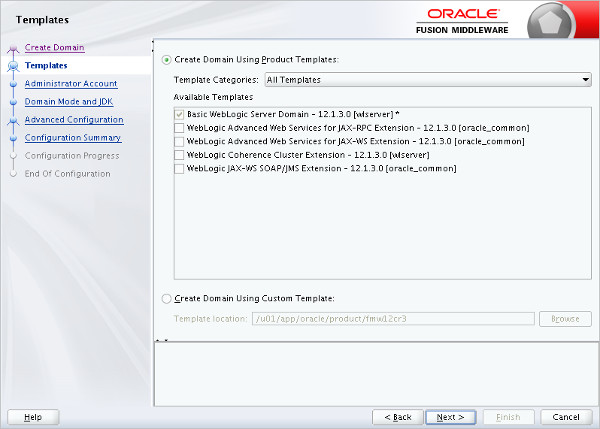
Select the required product template and click the "Next" button.
Step 10
11

Create Domain

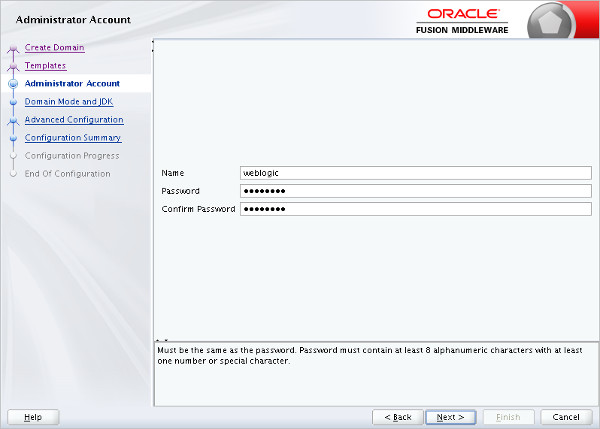
Enter the administrator credentials and click the "Next" button.
Step 11
12

Create Domain

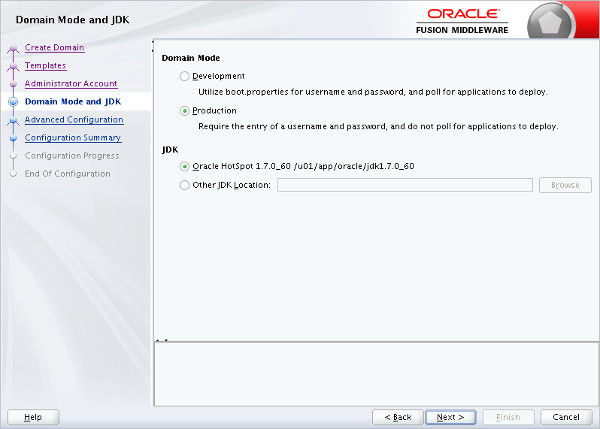
Enter the domain mode and JDK details, then click the "Next" button.
Step 12
13

Create Domain

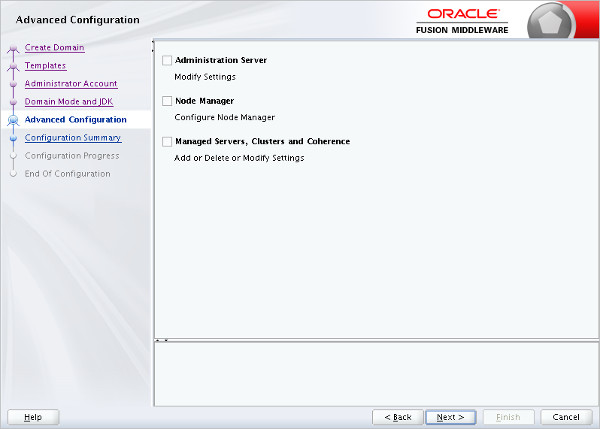
Select any required advanced configuration options. For this example I ignored the advanced configuration. Click the "Next" button.
Step 13
14

Create Domain

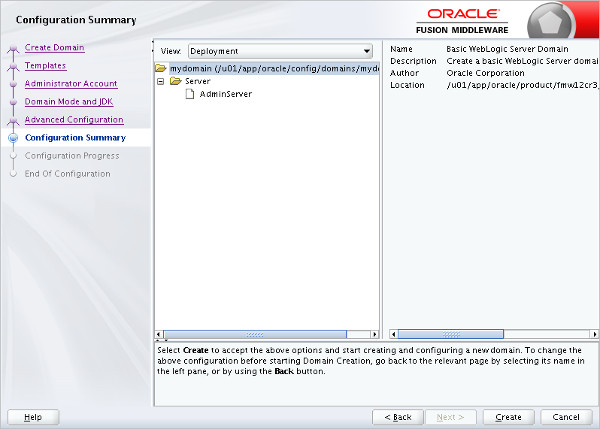
If you are happy with the configuration summary screen, click the "Create" button.
Step 14
15

Create Domain

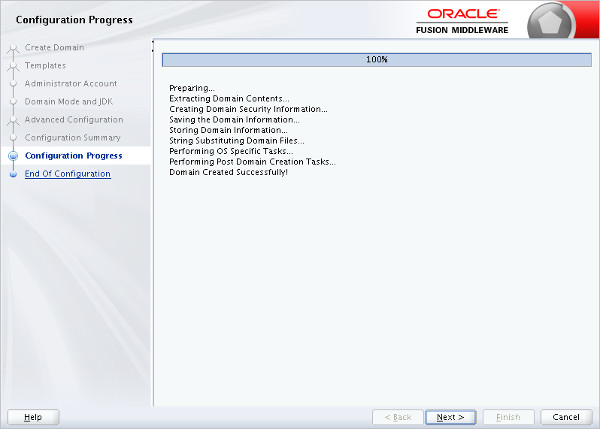
Once the domain is created, click the "Next" button.
Step 15
16

Create Domain

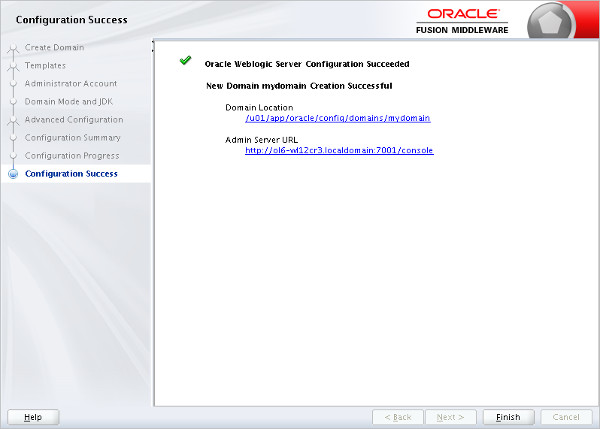
Make a note of the Admin Server URL and click the "Finish" button.
Step 16
17

Post-Installation

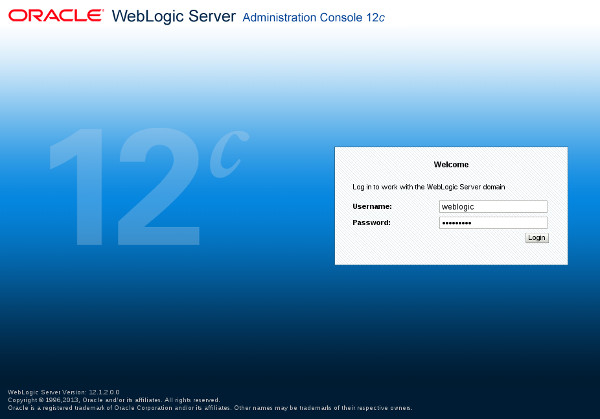
If you chose the "Production Mode" options for the domain, you will need to create a "boot.properties" file for the scripts referred to later to work without credentials. Adjust the DOMAIN_HOME and credentials appropriately. The "$ORACLE_BASE/config/domains/mydomain" directory now contains a script that can be used to start the server. Remember to use the "&" if you want access to the commandline to be returned. Once the server is started you can access the administrator console using the "http://hostname:port/console" URL. Log in using the username and password provided in the previous step.
Step 17
18

Post-Installation

The following scripts are useful. For more information see: Hope this helps. Regards Tim...
Step 18

Comments (0)

Please to add comments

No comments yet. Be the first to comment!